9 Methods to Stop Someone From Spreading Lies About You Online
 16 min read
 On this page
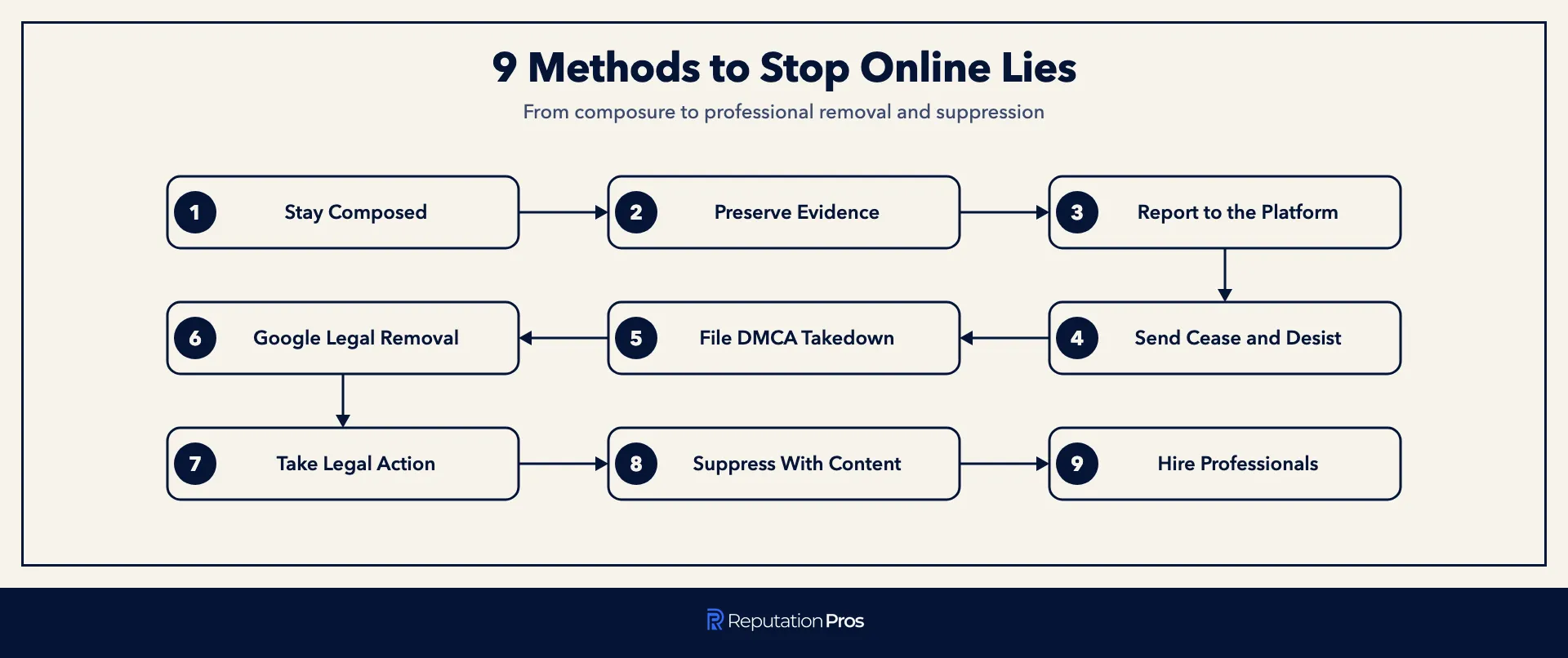
Stopping someone from spreading lies about you online follows a nine-method response that moves from composure and evidence preservation through platform reports, cease-and-desist letters, DMCA takedowns, and Google removal, and ends with legal action, suppression, and professional reputation management. The methods work together: each stage prepares evidence and leverage for the next, so a request denied at one step still strengthens the request at the step after.
The response opens with composure, because reacting impulsively amplifies the lies and weakens later claims, and then locks in preserved evidence before the content is edited or deleted. From there, the standard removal channels apply: platform reports under community guidelines, a cease-and-desist letter when the defamer is identified, a DMCA takedown for stolen photos or content, and a Google legal removal request to strip the URL from search results. When those stall, John Doe lawsuits unmask anonymous defamers and unlock injunctions plus damages.
When lies cannot be removed, the response pivots to suppression, publishing authentic, high-authority content that outranks the false pages in search, and to hiring a reputation professional who combines legal takedowns, technical SEO, and platform relationships in one coordinated program. Preventing recurrence relies on stronger privacy settings, mention monitoring, and a positive digital footprint, and rebuilding trust after the fact grounds the restored reputation in verified truth and consistent behavior.
Stay Composed and Avoid Escalating the Situation
To stop someone from spreading lies about you online, stay composed and avoid escalating the situation. Reacting impulsively or emotionally can amplify the issue, drawing more attention to the false claims and damaging your reputation further.
Staying composed projects control and credibility, which helps if legal action becomes necessary. A calm response lets you address the situation strategically, without confrontational or defensive behavior that could be used against you.
Assess the situation objectively and plan your next steps. Once you reach emotional stability, the next step is to secure proof of the lies before the content is altered or removed.
Preserve Evidence Before It Disappears
Preserving evidence before it disappears is a key step in stopping someone from spreading lies about you online. False statements can be deleted or altered fast, so capturing proof immediately is important.
Secure evidence with multiple methods:
- Take full-page screenshots that include the URL, date, and time.
- Save the webpage as a PDF and download any relevant video files.
- Submit URLs to a web archiving service such as the Wayback Machine, which creates permanent records.
Store the files in multiple secure locations, such as a local drive, encrypted cloud storage, and an off-site USB.
Beyond digital copies, gather supporting documentation of the harm: emails or messages that reference the lies, witness statements from people who saw the defamatory content, and records of professional or personal damage such as lost business opportunities or emotional distress. Preserved evidence becomes the foundation for reporting the content to the platform, giving concrete documentation of the false statement and its impact.
Report the Content to the Platform
Reporting defamatory content to a platform is an effective method to address lies spread about you online. Most social media platforms, such as Facebook, X, Instagram, TikTok, YouTube, LinkedIn, Reddit, and Google, have community guidelines that prohibit harmful or false content.
To report, locate the post, click the three-dot or menu icon, and select Report or Find support or report post. Choose the category that best fits the issue, such as Harassment, Bullying, or False Information, and provide preserved evidence such as screenshots or URLs.
After submission, the platform reviews the report to decide whether the content violates its policies, and a confirmed violation can lead to removal of the post or suspension of the offending account. A rejected report can be appealed with additional documentation.
Documenting the report and the platform’s response supports further legal action, because it shows that reasonable steps were taken to limit the harm.
Send a Cease and Desist Letter
Sending a cease and desist letter is a strategic step to stop someone from spreading lies about you online. The letter is a formal demand that the individual stop defamatory actions and retract false statements. A cease and desist letter works when the defamer’s identity is known, signaling the seriousness of the situation and the legal consequences of continued harm.
A strong cease and desist letter should include:
- Both parties’ full legal names and contact information.
- The exact false statements with publication dates and URLs.
- A factual rebuttal explaining their falsity and harm.
- A demand for removal and retraction by a set deadline, usually 7 to 21 days.
Send the letter by certified mail with a return receipt or a secure, traceable email to create a verifiable record of delivery. A lawyer can confirm the letter is enforceable under relevant defamation laws.
File a DMCA Takedown for Stolen Photos or Content
Filing a DMCA takedown is a strategic step in stopping someone from spreading lies about you online, especially when it involves stolen photos or content. The Digital Millennium Copyright Act, codified at 17 U.S.C. section 512, lets copyright holders request removal of infringing material from websites.
The DMCA process begins with documenting the infringement by saving screenshots and URLs of the unauthorized use. Next, submit a formal takedown notice to the platform hosting the content, including:
- Your contact information.
- Identification of the copyrighted work.
- The location of the infringing material.
- A good-faith statement that the use is unauthorized.
- A sworn declaration under penalty of perjury that your claim is accurate.
Major platforms such as Facebook, Instagram, X, and YouTube provide dedicated forms for DMCA takedown requests, and the law requires them to respond promptly, usually removing the infringing content within days.
The DMCA route works for content you own the copyright to and resolves faster than a defamation claim, but it cannot remove defamatory statements unless they involve your copyrighted material. When the content stays visible in search results after removal, you can request de-indexing through Google’s legal removal form for copyright violations.
Request Legal Removal From Google
Requesting legal removal from Google is a key step when other methods have not stopped the spread of lies online. The request goes through Google’s Legal Removal Tool or the Right to Be Forgotten form, which is available to European Union residents.
A legal removal request must include:
- The exact URLs of the defamatory content.
- A clear explanation of why the statements are false and damaging.
- Supporting legal documentation, such as a court order or evidence of a privacy violation.
When Google denies the request, a court order becomes necessary, because a court order compels the original source to remove the content and forces Google to de-index it. Linking the Google removal request to later court action strengthens your position and helps ensure the defamatory content is addressed.
Take Legal Action to Unmask and Stop the Source
Taking legal action to unmask and stop the source of online lies is a key step when other methods fail. A John Doe lawsuit uses the court’s subpoena power to reveal the identity of anonymous defamers, compelling internet service providers or platforms to disclose identifying information such as IP addresses and account details.
Once the defamer’s identity is confirmed, you can amend the complaint to name the responsible individual as a defendant. After identifying the source, you can pursue remedies such as monetary damages for reputational harm and injunctions against further defamatory statements.
The legal route often becomes necessary when the defamer stays anonymous and keeps spreading lies despite warnings. Act within the statute of limitations, usually one to three years from publication, to keep the legal action effective.
Suppress the Lies With Positive Content
Suppressing lies with positive content is a strategic form of online reputation management, often called reputation SEO. The method creates and promotes high-quality, positive content that ranks higher in search results, pushing harmful falsehoods lower.
Authentic, favorable information buries negative content deeper in search rankings where fewer people find it. The most effective assets include:
- Professional profiles on LinkedIn and industry platforms.
- Blog posts and press releases on topics tied to your name or brand.
- Regular social media updates with genuine accomplishments and testimonials.
Suppression works best with consistent content creation and search engine optimization. A strong presence across LinkedIn, personal or professional websites, and social channels helps displace negative content.
The method helps when defamatory content cannot be legally removed or when legal action is impractical. Suppression does not erase false content, but it reduces its visibility and impact, protecting your reputation from people searching your name.
Hire a Reputation Professional to Remove and Suppress
Hiring a reputation professional to remove and suppress lies online means engaging experts who manage and improve online reputations. Reputation professionals use a multi-part approach that combines legal knowledge, technical SEO, and platform relationships to remove or suppress false statements.
The experts understand content removal policies across platforms and search engines and can work through complex takedown procedures efficiently. A full-service engagement covers:
- Negotiation with website administrators for content removal.
- Strategic content suppression through search engine optimization.
- Creation of positive content to outweigh negative results.
The full approach minimizes or eliminates defamatory content and restores an individual’s or business’s online reputation. A reputable reputation management firm can provide a thorough assessment and set realistic timelines and outcomes for handling online defamation.
What is Defamation?
Defamation is a false statement about a person or entity that damages their reputation. Defamation takes two main forms: libel, which is written or published false statements, and slander, which is spoken false statements. A legally actionable defamation claim must meet four criteria: a false statement of fact, communication to at least one third party, fault such as negligence or malice, and demonstrable harm to the victim’s reputation or livelihood, according to the “Defamation” entry in the Legal Information Institute’s Wex, Cornell Law School. Written defamation, or libel, often causes more persistent damage because of its permanent, discoverable nature.
What is online defamation?
Online defamation is the publication of false statements about a person or business on the internet that cause reputational harm. Online defamation appears across digital platforms, including social media sites, websites, and forums. Online defamation covers both written statements, known as libel, and spoken statements, known as slander, when they spread through internet channels. The digital nature of online defamation lets falsehoods spread fast and persist, often causing more extensive and lasting damage than traditional defamation.
How to Document Online Lies for Legal Evidence?
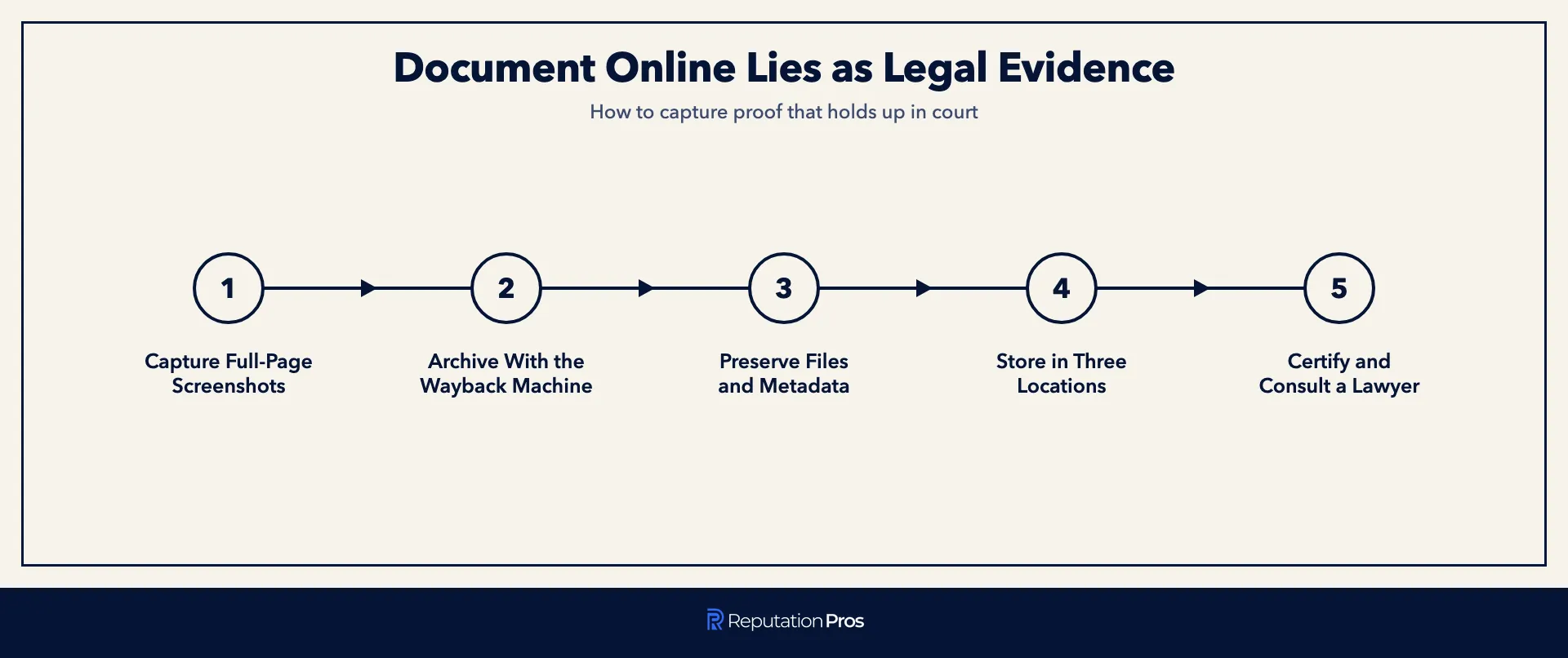
Documenting online lies for legal evidence requires precise methods that hold up in court. Capture the full content with visible URLs, account names, and timestamps using full-page screenshots or video recordings, and include relevant details such as engagement metrics like shares or comments for context. Use web archiving services such as the Wayback Machine to create permanent, timestamped records. Preserve all original files and metadata without alteration to keep the evidence’s integrity. Store the evidence in at least three separate locations, such as a local drive, cloud backup, and off-site USB, to keep a complete, unaltered chain of custody. For high-stakes cases, use forensic tools to generate cryptographic hashes and obtain professional certification of the capture date and originality. Consulting a defamation attorney early helps ensure the evidence holds up in court.
What are alternatives to lawsuits for stopping online lies?
Alternatives to lawsuits for stopping online lies are practical, cost-effective methods to address defamatory content without going to court. The alternatives are listed below:
- Platform reporting: report the content to social media platforms or websites, which may remove it when it violates their terms of service.
- Cease and desist letters: send a formal letter demanding an end to defamatory activity, which often deters further false statements.
- DMCA takedown notices: for content that infringes copyright, file a DMCA notice to remove unauthorized material.
- Online reputation management services: use SEO to suppress negative content and raise the visibility of positive information.
- Direct negotiation: contact the individual or site owner to request voluntary removal.
The alternatives work when legal action is not feasible because of cost, the defamer’s anonymity, or difficulty proving defamation.
Suppressing Online Lies About Yourself
Suppressing online lies about yourself uses search engine optimization to raise positive content above negative search results. The method creates and promotes authentic, favorable content, such as professional profiles, social media posts, and blog entries, that ranks higher in search engines. Higher-ranked positive content reduces the visibility of false information and complements legal action where removal is hard. Suppression takes ongoing effort to keep the positive content prominent and suppress negative search results so the lies do not resurface.
Why Choose Reputation Pros to Remove and Suppress Negative Content?
At Reputation Pros, we are the right choice for removing and suppressing negative content because we manage online defamation through a full approach that pairs legal removal with advanced content suppression. As an online reputation management company, we understand the technical and legal details of platforms such as Google, social media, and review sites, which lets us run effective DMCA takedowns, legal removal requests, and strategic SEO suppression. With Reputation Pros, you gain a dedicated team that handles evidence preservation, platform negotiation, and positive content creation, so you can focus on rebuilding your reputation while experts work to eliminate or bury false statements about you online.
How to prevent someone from spreading lies about you online?
Preventing someone from spreading lies about you online relies on proactive measures that protect your reputation and digital presence. The key strategies are listed below:
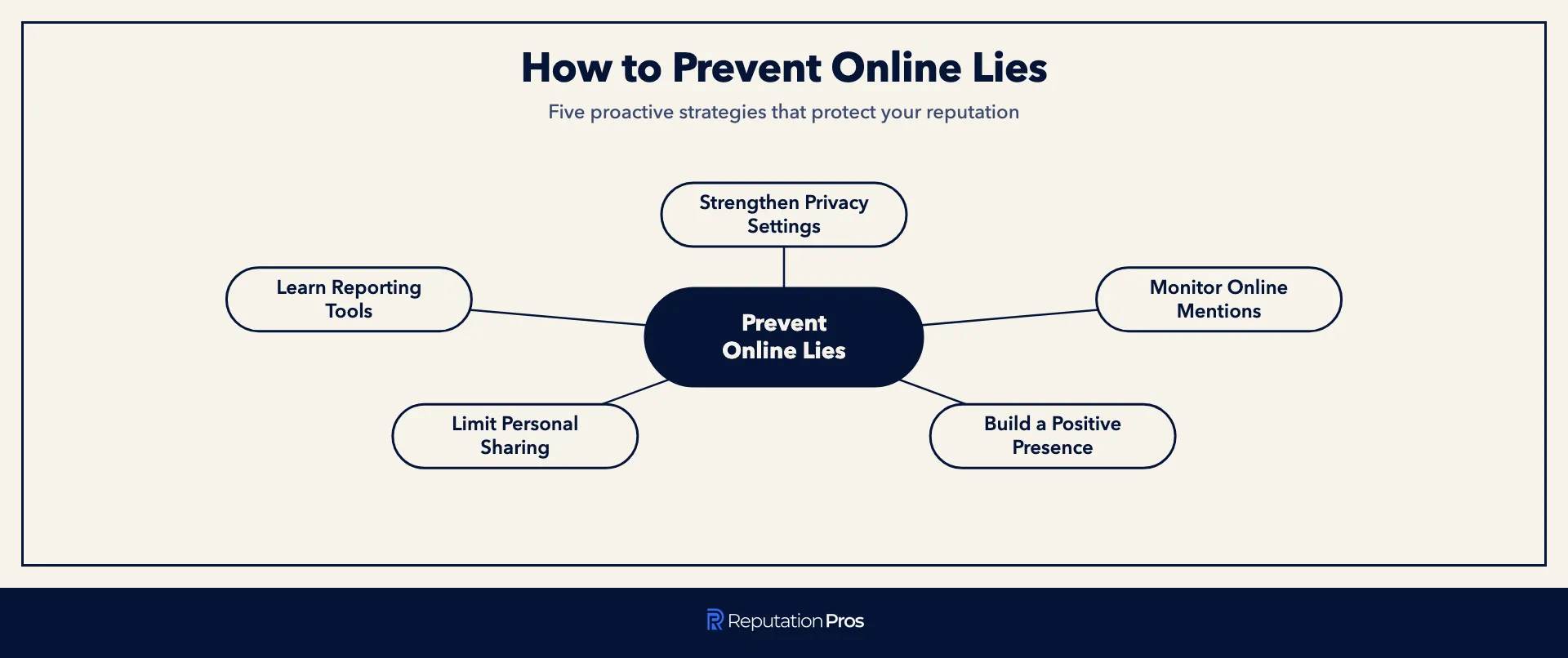
- Strengthen privacy settings: adjust privacy settings on all social platforms to control who sees and interacts with your content, limiting an attacker’s access to personal information.
- Monitor online mentions: use tools such as Google Alerts to track mentions of your name and catch false statements early.
- Build a positive online presence: keep a strong, positive digital footprint by engaging authentically and publishing credible content.
- Limit personal information sharing: reduce the personal data you share publicly to lower the risk of defamation.
- Learn the reporting mechanisms: know the platform-specific reporting tools and the defamation laws in your jurisdiction.
The strategies reduce the openings for lies to spread and keep you in control of your online reputation, and they fit into the wider picture of how proactive and reactive strategies differ in reputation management.
How Do You Rebuild Trust After Stopping Online Lies?
Rebuilding trust after stopping online lies takes a deliberate, transparent approach. Take responsibility for any misunderstandings and communicate openly with those affected. Explain the steps taken to address the falsehoods and provide evidence of their resolution. Consistency counts: keep a positive online presence with authentic content that reflects your true character. Engage actively with your network and fulfill commitments to reinforce credibility, and use testimonials and positive reviews from trusted people to support your reputation. The trust-rebuilding work grounds your restored reputation in verified truth and consistent behavior, returning to the composure with which you first approached the situation.
For a full playbook covering the wider recovery arc, see our guide on how to rebuild your damaged online reputation.