How to Stop Online Defamation
 16 min read
 On this page
To stop online defamation, work through an eight-step response that moves from preserving evidence to suppressing content that cannot be removed. Online defamation is a false, published statement of fact that harms a person’s reputation. The eight-step method includes the following actions:
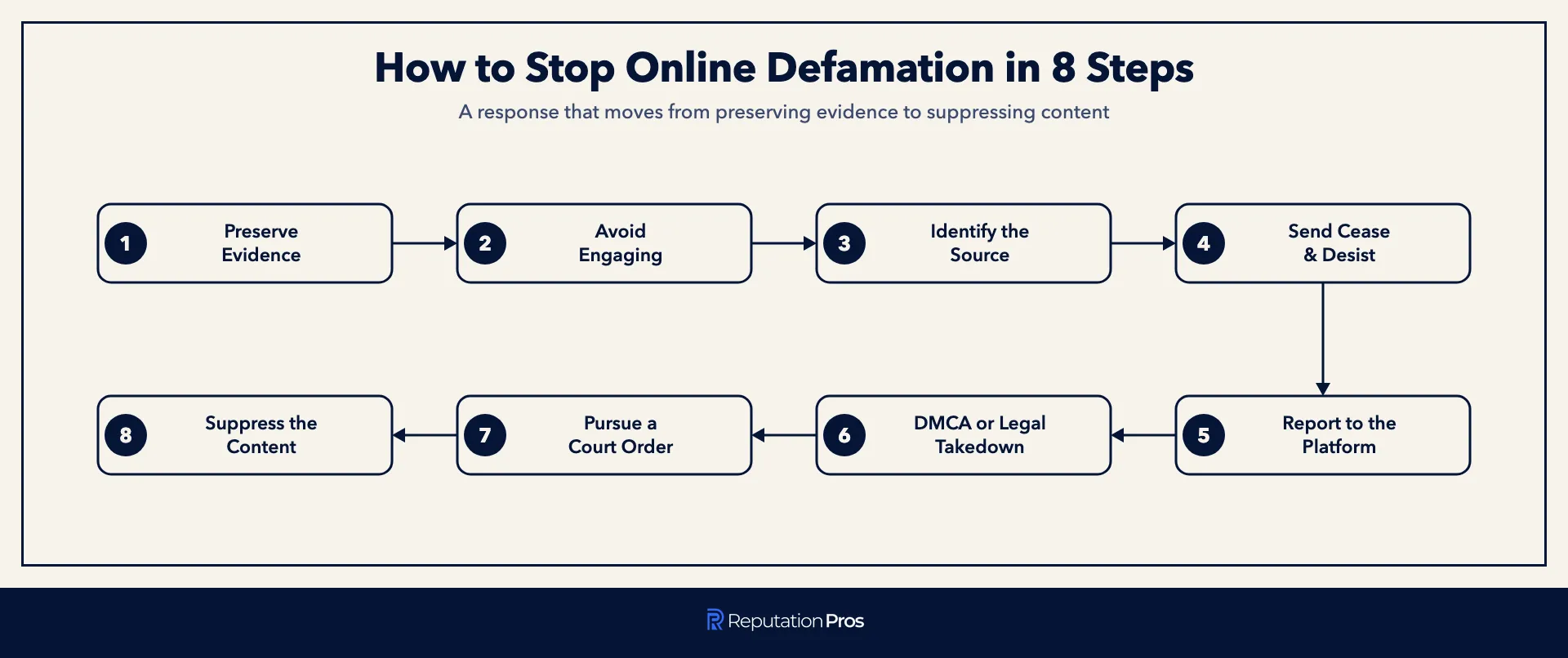
- Preserve Evidence: Capture screenshots and save URLs to document the defamatory content.
- Avoid Engaging: Do not respond to the defamatory content to prevent the Streisand effect, which can amplify the issue.
- Identify the Source: Determine who is responsible for the defamation, using legal discovery when needed.
- Send a Cease-and-Desist Letter: Formally request the defamer to stop and remove the content.
- Report to the Platform: Notify the platform hosting the content about the violation of their terms of service.
- File a Legal or DMCA Takedown: Use legal channels to request removal, above all for copyrighted material.
- Pursue a Court Order: Obtain a legal order to compel the removal of the content when previous steps fail.
- Suppress Content When Removal Is Impossible: Use SEO strategies to push the defamatory content lower in search results.
A professional should be brought in when self-help stalls, above all when the platform refuses removal or the defamation causes measurable financial damages. Reputation Pros stops online defamation by combining legal pressure, technical strategy, and ongoing SEO work. Once the defamation is stopped, rebuilding your reputation involves publishing optimized positive content to restore public trust. The rebuilding outcome connects back to the evidence-first start of the process.
Step 1: Preserve Evidence of the Defamation
Preserving evidence is the first step to stopping online defamation. Evidence preservation means capturing the defamatory content in its original form to prevent alterations or deletions. Use full-page screenshots that include the URL, date, time, and the poster’s username. Save the original HTML source or use web archiving tools like the Wayback Machine to create an independent, third-party record. Complete documentation establishes a strong foundation for later legal actions.
Beyond screenshots, document metadata such as device information and internet connection details. Store the evidence in multiple secure locations, including local drives, cloud storage, and off-site backups, which keeps its integrity for legal proceedings. Once the evidence is securely captured, refrain from responding to the defamatory content. Engaging with the post can amplify the issue and weaken your legal position.
Step 2: Avoid Engaging and the Streisand Effect
After preserving evidence of online defamation, avoid engaging with the defamatory content. Engaging directly, whether by commenting or publicly refuting the claims, worsens the issue. A public reaction leads to the Streisand Effect, where attempts to suppress information increase its visibility. When you respond publicly, the response signals to algorithms that the content is generating engagement, which pushes it higher in search results and social media feeds.
The Streisand Effect occurs when efforts to hide or dispute defamatory content produce greater public interest and visibility. Staying silent prevents the defamation from becoming a trending topic or public debate, because every interaction can validate the post’s relevance in digital algorithms. Instead of engaging, focus on documenting the defamation and preparing a cease-and-desist letter or platform report to address the issue legally and privately.
Step 3: Identify the Person Behind the Defamation
Identifying the person responsible for online defamation is a key step in addressing the issue. Start by examining available profile information, such as usernames, email addresses, or IP data linked to the defamatory content. The profile clues help trace the source, above all when the individual comes from your personal or professional circle. Document all identifying information alongside preserved evidence to support formal actions.
When the defamer remains anonymous or uses a pseudonym, additional steps uncover their identity. Legal requests, such as subpoenas, can be submitted to social media platforms to obtain account holder information. Online investigation tools also trace digital footprints to real individuals. Once you have identified the source, you are prepared to proceed with a formal demand targeting the person responsible for the defamation.
Step 4: Send a Cease and Desist Letter
Sending a cease and desist letter is a key step in addressing online defamation. The formal document notifies the individual or entity responsible for the defamatory content that their statements are false and harmful. The letter demands the immediate removal of the content and an end to further defamatory actions. The letter should identify the defamatory statements, explain why they are false, outline the harm caused, and specify the actions required to resolve the matter. The demand includes removal of the content and a commitment to refrain from future defamation.
To strengthen a cease and desist letter, have it prepared or reviewed by an attorney experienced in defamation law. Attorney involvement adds legal weight and keeps the language assertive without crossing into threats or harassment. Send the letter via certified mail or another trackable method to confirm receipt. When the recipient complies and removes the content, this step stops the defamation without costly litigation. When they ignore or refuse the demand, the documented cease and desist becomes valuable evidence as you move forward to report the content to the platform or pursue more formal legal channels.
Step 5: Report the Content to the Platform
To report defamatory content on a platform, first gather complete evidence. Capture screenshots showing the content, including URLs, timestamps, usernames, and engagement metrics like comments or shares. The documentation supports your claim and helps the platform’s review process. Once evidence is secured, use the platform’s reporting mechanism, reached through options like “Find support or report post.” Categorize the content as “Harassment,” “False information,” or “Defamation,” aligned with the platform’s policy violations.
When submitting the report, detail how the content breaches the platform’s guidelines, such as rules against harassment or impersonation. Attach the preserved evidence to strengthen your case. When the initial report does not lead to removal, request a review or escalate the matter through legal channels, such as a cease-and-desist letter or a DMCA takedown. The systematic approach improves the chance of content removal and protects your reputation.
Step 6: File a Legal Removal or DMCA Takedown
Filing a legal removal request or DMCA takedown notice is the step that follows when platform reporting fails to stop online defamation. A legal removal request involves drafting a formal notice that cites the specific law violated, such as defamation statutes or privacy regulations. The notice must include the URL of the offending content and a detailed explanation of how the material is false and injurious to your reputation. Submission runs through the platform’s legal request portal or designated agent.
A DMCA takedown notice applies when the defamatory content includes copyrighted material you own, such as photographs, videos, or written work. The notice requires your contact information, identification of the copyrighted work, the infringing URL, a statement of unauthorized use, and a signature under penalty of perjury. Both methods require precision and supporting evidence, because incomplete or inaccurate filings may be ignored. When these mechanisms fail, the next step is to seek judicial intervention through a court order.
Step 7: Pursue a Court Order to Compel Removal
To pursue a court order that compels removal of defamatory content, start a defamation lawsuit. The legal action requires proving that the statement is false, publicly shared, and damaging to your reputation. You must show that the statement was made with negligence or actual malice, above all when you are a public figure. Once you succeed in court, the judge may issue an injunction that mandates removal of the defamatory content from the platform, website host, or original poster.
A court order becomes the tool of choice when other methods, such as cease-and-desist letters or platform reports, have failed. The court order compels both the publisher and third parties like search engines to remove or block access to the content. When removal still fails due to non-compliance or platform refusal, the next move is Step 8, where suppression of the content becomes the strategy.
Step 8: Suppress the Content When Removal Is Impossible
When removal of defamatory content is impossible, suppression becomes the strategy. Suppression involves pushing harmful content down in search engine results by promoting positive, high-authority content. The approach keeps the negative information less visible to users searching for your name or brand.
To suppress unwanted content, create and optimize a portfolio of positive digital assets. The positive assets include professional websites, social media profiles, and press releases. Consistent publication of optimized articles and strategic link-building raise the visibility of these positive narratives. Suppression does not eliminate the defamatory content, but it reduces its impact by lowering its prominence in search results.
As a reputation management company, we handle this work end to end. Our team runs the full playbook to suppress negative search results — building and promoting positive assets, earning authoritative backlinks, and continuously monitoring the search page so defamatory content stays buried below the fold.
What is Online Defamation?
Online defamation is a false statement of fact, published on the internet, that harms an individual’s reputation. Online defamation occurs on digital platforms, including social media, blogs, and forums, where the false information spreads fast and can remain accessible for a long time. Defamation involves making false derogatory statements that lead to lawsuits and damages, because the statements must be presented as factual rather than opinion. Under online defamation law, the statement must be communicated to at least one other person beyond the target, and it must be proven that the statement caused reputational damage, according to the Legal Information Institute’s Wex entry on defamation. The accessibility of digital platforms lets almost anyone publish harmful content and become liable for defamation when their statements meet these legal criteria.
When Should You Bring in a Professional to Stop Online Defamation?
Bringing in a professional to stop online defamation becomes necessary when self-help efforts fail, the defamatory content spreads fast, or measurable damages occur.
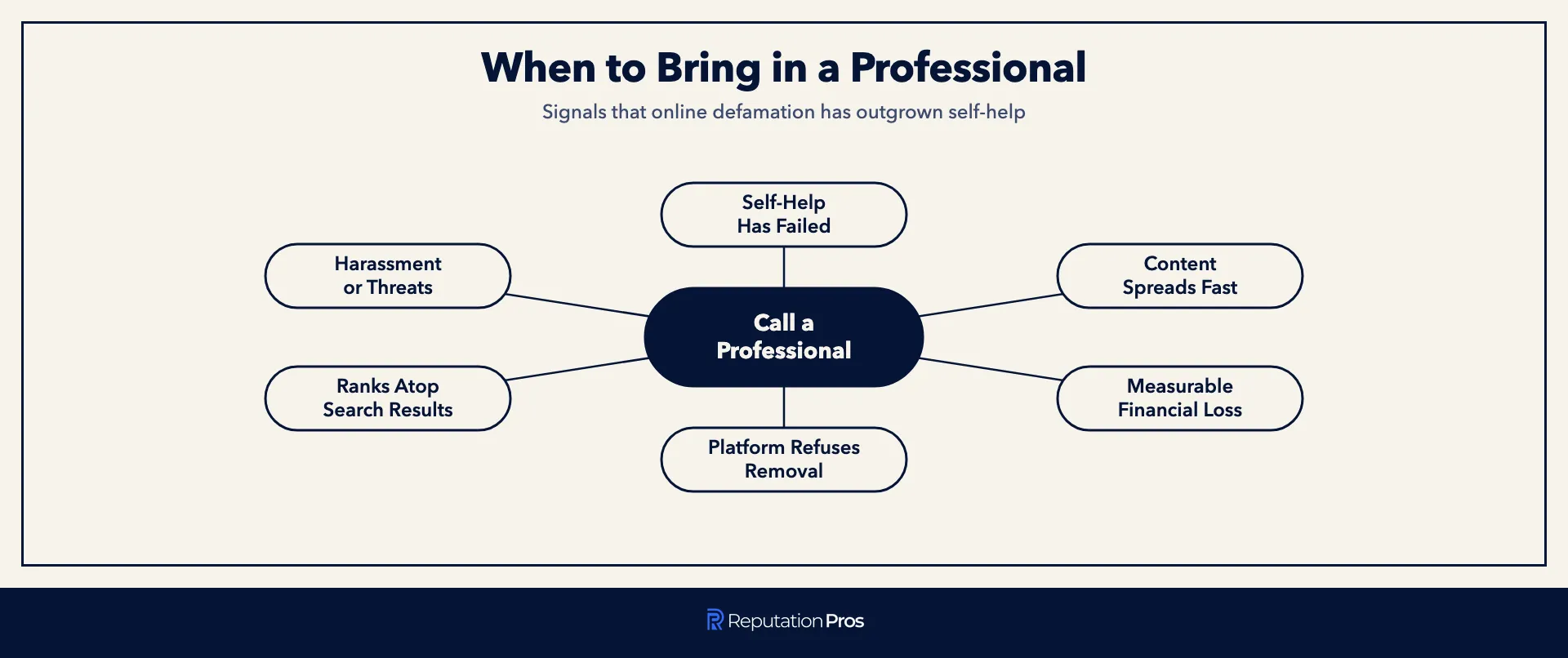 Legal experts recommend consulting an attorney or reputation management specialist when digital damage escalates, financial loss happens, or the situation involves harassment, threats, or accusations of criminal activity. Consulting an attorney is the right call when a platform refuses to remove the content or when the post appears near the top of search results. The escalation factors require legal takedowns, court orders, or professional suppression strategies that exceed individual capabilities.
Minc Law, a recognized firm in internet defamation, states that hiring a professional becomes necessary when informal attempts to resolve the issue fail. The situation may require expert guidance on litigation, settlement, and long-term removal strategies. Reputation management professionals apply suppression strategies and online countermeasures that push defamatory content lower in search results while pursuing removal, which provides immediate relief while longer-term legal or platform-based solutions progress.
Why Choose Reputation Pros to Stop Online Defamation?
At Reputation Pros, we are the choice for stopping online defamation because of industry-leading expertise and a proven track record. As an online reputation management company, we hold a #1 industry ranking for suppressing negative search results and removing harmful content using ethical SEO and AI strategies. With a 99% success rate and over nine years of experience, we specialize in regaining control of online presence for high-profile individuals and executives. We also offer customized brand stewardship to restore credibility and reclaim authority over digital identities globally.
What If the Defamation Cannot Be Removed?
When defamation cannot be removed through legal or platform-based methods, suppression becomes the alternative strategy. Suppression works by pushing positive, accurate content higher in search results so that the defamatory material appears lower in rankings and becomes less visible to those searching for your name or business. Suppression does not erase the harmful content, but it reduces its reach and impact by burying it beneath a layer of credible, reputation-building information that reshapes the narrative found by employers, clients, and the public.
How Do You Rebuild Your Reputation After Stopping the Defamation?
Rebuilding your reputation after stopping online defamation involves creating a positive digital presence that displaces negative content. Start by publishing authentic content that highlights your expertise and achievements. Positive content includes thought leadership articles, videos, and engagement on professional platforms like LinkedIn. Establishing a personal website or blog with your name strengthens your online identity.
Encouraging satisfied clients or colleagues to share positive reviews restores credibility. Monitor search results to address any new negative mentions on a prompt basis. The proactive approach replaces the false statements of defamation with verified positive information and restores your reputation. By focusing on positive content creation and engagement, you counteract the harm caused by defamation, which aligns with the evidence-first strategy that began the online defamation response.
For a step-by-step playbook once the defamation is contained, see our full guide on how to rebuild your damaged online reputation.