What Is Public Shaming?
 17 min read
 On this page
Public shaming is the act of publicly exposing and condemning a person for perceived wrongdoing to provoke collective disapproval. Online public shaming amplifies the practice through social media and digital platforms, which allows widespread and immediate spread. The distinction between shame and guilt is clear: shame is the feeling that one’s self is flawed, while guilt is the perception that a specific action was wrong. Public shaming once occurred in physical locations like town squares, but the practice has moved to online spaces where anonymity and reach intensify the effects.
Online public shaming takes several forms, including call-out and cancel culture, doxxing, and viral mob shaming. Call-out and cancel culture involve publicly denouncing someone’s actions to demand accountability, which leads to social ostracism. Doxxing exposes private information to harass individuals, while viral mob shaming involves coordinated mass criticism. The effects on victims can be severe and lead to anxiety, depression, and suicidal thoughts.
To stop public shaming, individuals should document incidents, seek professional advice, and use strategic communication to demonstrate accountability. Recovery involves time, support, and rebuilding one’s digital presence. Preventing public shaming requires a community where accountability takes priority over humiliation, which aligns with the original intent of public shaming to provoke collective disapproval without lasting harm.
What is online public shaming?
Online public shaming is the act of exposing and condemning individuals for perceived misconduct on digital platforms. The modern form of public shaming uses the vast reach of social media and other online networks to amplify the disapproval, which results in widespread ridicule and reputational damage. Unlike traditional public shaming, which stayed within physical spaces like town squares, online shaming crosses geographical boundaries and time constraints and lets accusations and criticisms spread fast and persist for a long time. Online public shaming leads to social, professional, and personal impacts, because the digital records of the shaming can resurface repeatedly.
What is the meaning of public shaming?
Public shaming is the act of publicly exposing and condemning a person for perceived wrongdoing to provoke collective disapproval and social punishment. The practice aims to dishonor or disgrace an individual and serves as a means to enforce societal norms and deter future offenses. Public shaming once ran in physical spaces like town squares, where the community could witness the punishment and reinforce social standards.
Today, public shaming has moved to digital platforms, where the reach and impact are magnified through social media and online communities. The shift transformed public shaming into a more pervasive and enduring form of criticism, which leaves a lasting digital footprint that affects an individual’s personal and professional life. Public shaming remains a controversial practice due to its potential for serious psychological harm, including anxiety, depression, and social ostracization.
What is the difference between shame and guilt?
Shame and guilt are distinct emotional responses.
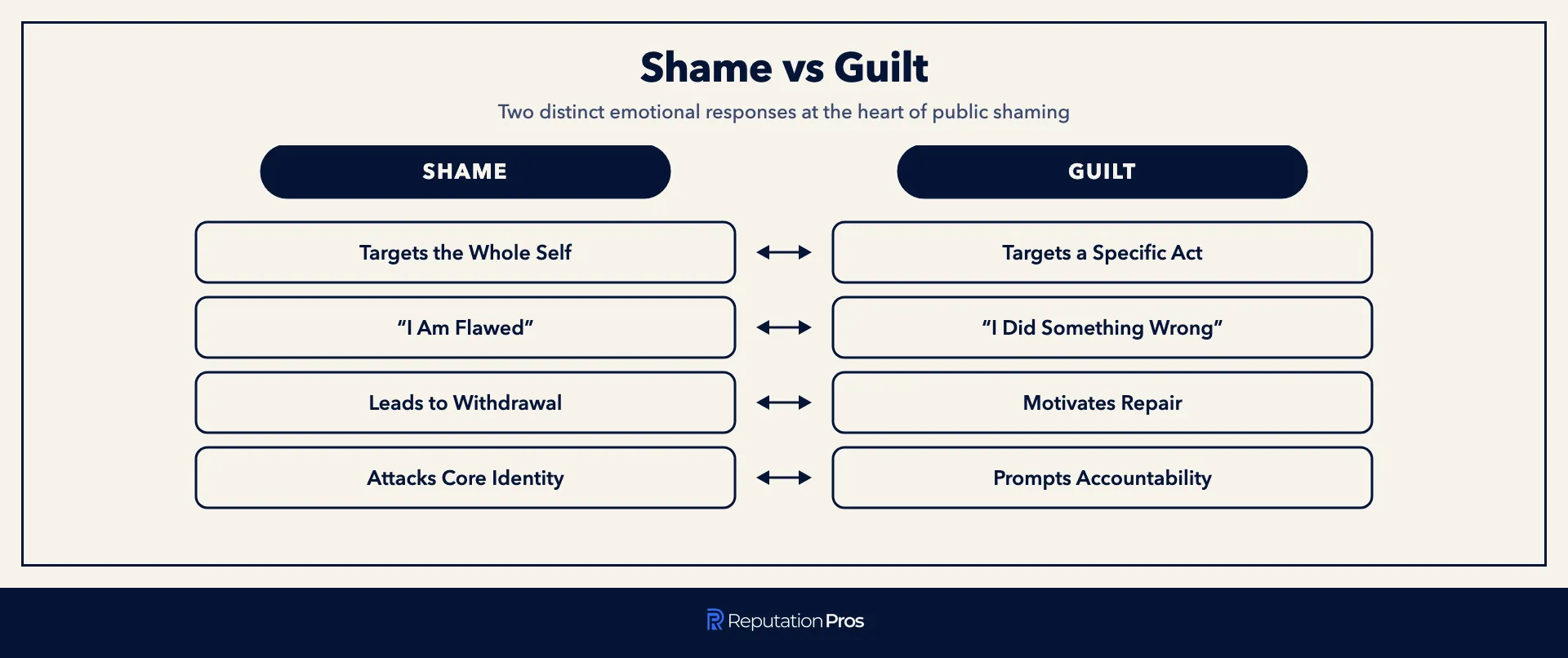 Shame is an internal feeling that targets the entire self and leads individuals to believe they are fundamentally flawed. Guilt focuses on a specific behavior and prompts individuals to acknowledge that they have done something wrong. While guilt motivates reparative actions like apologizing, shame leads to withdrawal or defensive reactions. The difference is important in addressing public shaming, because public shaming targets a person’s core identity rather than specific behaviors that can be corrected.
How Did Public Shaming Move Online?
Public shaming moved online with the arrival of the internet and social media, which transformed the practice from local town squares to digital platforms. The shift began in the 1980s and expanded with the rise of social media, which amplifies the reach and impact of shaming. Unlike traditional public shaming, which stayed within a physical audience, online shaming reaches a global audience instantly. The digital nature of the practice allows widespread participation, anonymously, and leaves a permanent online record. Social media platforms enable rapid spread of information, which can result in serious social, psychological, and financial harm to individuals.
What Are the Forms of Online Public Shaming?
Online public shaming takes several distinct forms, each using digital platforms to expose and condemn individuals for perceived transgressions. The primary forms are listed below:
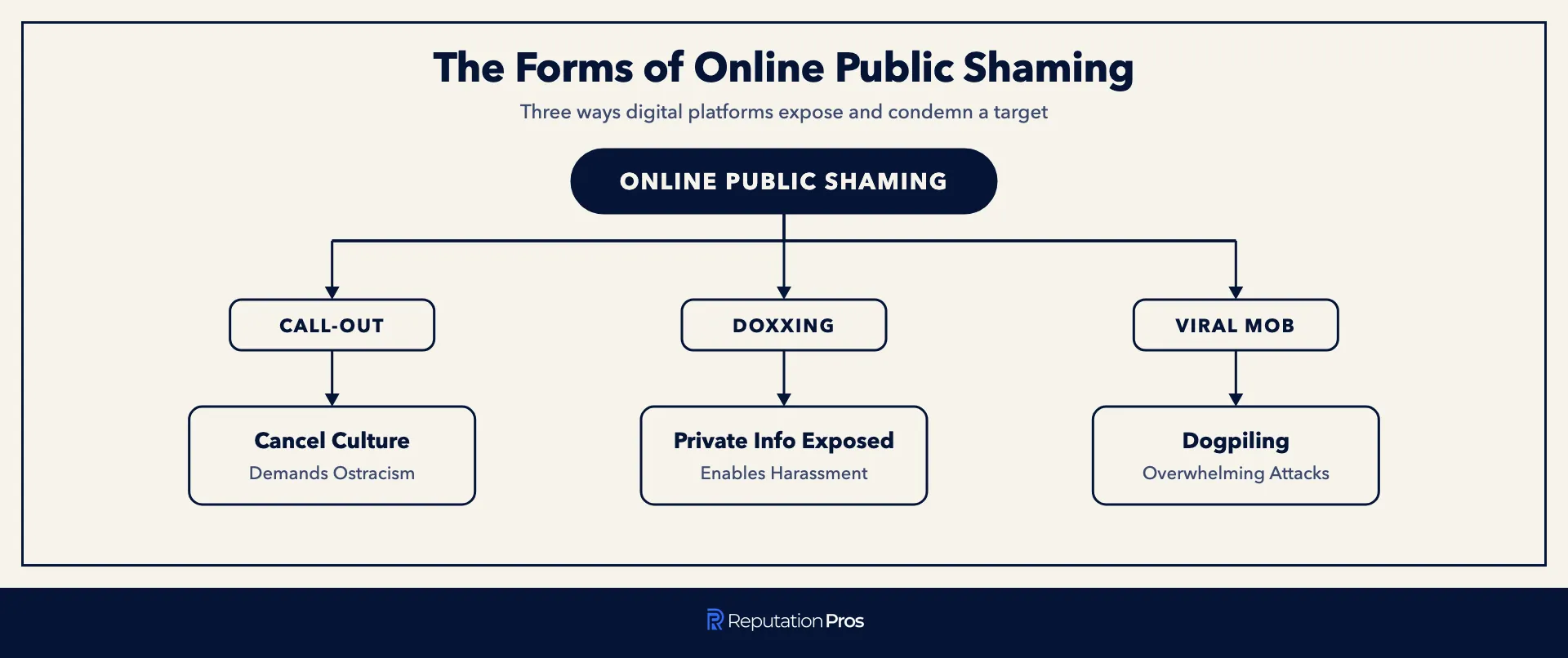
- Call-Out and Cancel Culture: Publicly criticizing individuals on social media for actions or statements deemed unacceptable, which leads to demands for their ostracization from professional and social communities.
- Doxxing and Exposure: Publicly revealing personal information about an individual without their consent, including addresses, phone numbers, and other identifying details, which leads to harassment.
- Viral Mob Shaming and Dogpiling: A large group of internet users collectively attacks or mocks a target through mass commenting and sharing, which creates overwhelming negative attention.
Each form of online public shaming shares the goal of public condemnation, and the mechanisms show how digital shaming has evolved beyond traditional public humiliation.
Call-Out and Cancel Culture
Call-out culture involves publicly identifying and criticizing individuals for harmful or offensive behavior, usually on social media platforms. The practice aims to hold people accountable by prompting apologies or behavioral changes. Call-out culture focuses on raising awareness and encouraging reform rather than punishment. Cancel culture, seen as an extension of call-out culture, goes further by seeking to socially or professionally ostracize the individual. Cancel culture involves coordinated actions like boycotts and mass unfollowing, which lead to loss of support and opportunities. While call-out culture promotes accountability, cancel culture can produce severe, long-term consequences without allowing for dialogue or rehabilitation.
Doxxing and Exposure
Doxxing is the act of publicly revealing an individual’s private information without consent, to intimidate or punish. The practice involves sharing details such as home addresses, phone numbers, and financial records. The intent is to expose the individual to harassment or threats and escalate online shaming into real-world danger. Exposure in doxxing creates a lasting vulnerability, because once private information is shared online, it is almost impossible to remove. Doxxing weaponizes personal data and turns it into a tool for control and humiliation.
Viral Mob Shaming and Dogpiling
Viral mob shaming and dogpiling occur when large groups of internet users collectively target an individual with criticism, insults, and harassment. The form of online public shaming is triggered when a post or comment goes viral, which leads to a rapid escalation of negative attention. The overwhelming volume of attacks can cause severe psychological effects, including anxiety, depression, and suicidal ideation. Victims face isolation and powerlessness as their reputation is damaged in real time, with little opportunity for defense or due process.
Dogpiling is worsened by the anonymity of online platforms, which emboldens participants to engage in extreme behavior. The lack of accountability and the viral nature of the attacks ensure maximum visibility and lasting reputational damage. To manage dogpiling, experts recommend staying calm and limiting engagement to avoid escalation. Documenting all interactions and reporting harassment to platform authorities also works. Building a supportive online community to help report and block abusive content reduces the effects of viral mob shaming.
How Does Public Shaming Work?
Public shaming works by publicly exposing and criticizing an individual’s perceived wrongdoing to trigger collective disapproval. The process begins when a transgression is shared publicly, through social media or digital platforms. Once exposed, the content spreads fast through user engagement and creates a viral effect that amplifies the criticism. The collective nature of online platforms transforms individual judgments into a coordinated wave of public disapproval. Participants join in with criticism, mockery, or calls for consequences and add to the social pressure on the target.
The mechanism relies on the architecture of digital platforms, which prioritize engagement and virality through algorithms that amplify emotionally charged content. As more people engage with shaming content, the platforms distribute it more widely and create a self-reinforcing cycle. The digital infrastructure enables shaming campaigns to persist for a long time, because content remains searchable and accessible long after the initial incident. The public nature of the condemnation, combined with the permanent digital record, creates lasting reputational damage that extends beyond the online sphere into victims’ professional and personal lives.
What are the causes of public shaming?
Public shaming arises from several interconnected causes rooted in both individual psychology and social dynamics. At its core, public shaming is triggered by perceived violations of social norms, moral standards, or community values, whether the transgression involves unethical behavior, offensive statements, or actions deemed harmful by a group. The accessibility and viral nature of social media platforms have amplified these triggers and allowed minor infractions or misunderstandings to escalate fast into widespread condemnation. The anonymity and distance provided by digital platforms lower the barriers for participation and make it easier for individuals to publicly call out others without facing immediate consequences.
Other contributing causes include the desire for social justice and accountability, above all when traditional institutions fail to address wrongdoing, and the performative aspect of online behavior where individuals seek validation and social status by aligning themselves with popular moral positions. The speed at which information spreads online, combined with algorithms that prioritize engagement and controversy, creates an environment where shaming campaigns gain momentum quickly and unpredictably. The interconnected causes converge to produce social effects that extend far beyond the initial act of shaming and impact both individuals and communities.
What are the social effects of public shaming?
Public shaming impacts both individuals and communities. Public shaming creates a climate of fear and self-censorship, where people hesitate to express opinions due to the fear of becoming targets. The practice reinforces mob mentality and polarization, as groups quickly form to condemn individuals without due process. Public shaming erodes trust in social institutions and undermines principles of justice and rehabilitation. The viral nature of online shaming perpetuates social stigma and affects not only the targeted individuals but sometimes extends shame to their families and communities for extended periods. The effects contribute to the loss of professional opportunities and friendships and further disconnect individuals from their social networks.
Why Do People Take Part in Public Shaming?
People engage in public shaming for psychological and social reasons. At its core, public shaming serves as a form of social policing, where individuals condemn perceived transgressions to enforce social norms and deter future violations. Participants engage in the behavior to restore their own sense of moral standing and signal their values to their community. The act of public shaming provides individuals with a sense of righteousness and belonging to a collective that shares similar values.
In online environments, the anonymity and distance of digital platforms lower psychological barriers and make it easier for people to join shaming campaigns without confronting the direct consequences. Social media amplifies these motivations by creating environments where public shaming becomes a form of social currency. Participants seek validation through likes, shares, and comments from others who support the shaming effort, which reinforces their behavior through positive feedback loops. The drive to participate is rooted in a desire to punish behaviors such as racism, sexual misconduct, or dishonesty, and thereby protect the community’s moral order.
What Are the Effects of Public Shaming on Victims?
Public shaming impacts victims and leads to severe psychological and social consequences. Victims experience intense emotional distress, including anxiety, depression, and post-traumatic stress disorder (PTSD). A 2017 Pew Research Center study, “Online Harassment 2017,” found that 44% of people harassed online said the experience caused mental or emotional stress, and among those facing severe harassment, 45% reported mental or emotional stress and 25% reputational damage, with victims describing humiliation, isolation, and worthlessness. The social ramifications of public shaming run deep and result in the loss of friendships, damage to professional reputations, and even job loss. The enduring nature of online shaming worsens these effects, because digital records perpetuate the exposure and stigma associated with the incident.
Beyond psychological distress, public shaming carries long-lasting social effects. Victims face social ostracism as friends, family, and colleagues distance themselves and fear association with the shamed individual. The isolation leads to a diminished sense of self-worth and identity and makes recovery hard. The cumulative pressure from public shaming drives some individuals to extreme actions, including self-harm or suicide. The disproportionate nature of online shaming, where minor infractions lead to severe social penalties, further compounds the trauma experienced by victims.
Recovery from public shaming is possible but requires a structured approach. Therapeutic interventions, such as Cognitive Behavioral Therapy (CBT), help victims reframe negative self-perceptions and reduce psychological distress. Support groups provide a sense of community and build resilience. Rebuilding trust in safe relationships and reclaiming personal agency through creative actions are core steps in healing from the wounds of public shaming. While the scars may be lasting, individuals can navigate the aftermath to rebuild their sense of self-worth and internal narrative.
How to Stop Public Shaming
Stopping public shaming involves a series of strategic actions aimed at reducing harm and preventing recurrence. The steps focus on individual behavior, community response, and systemic change, and are listed below:
- Stay Calm: In moments of public shaming, remain composed. Calmness comes through deep breathing and a steady posture, which helps avoid impulsive reactions.
- Address It Privately: When shaming repeats, seek a private discussion with the person responsible. Express concerns in a professional manner to resolve the issue without public escalation.
- Talk to Colleagues or Trusted Individuals: Sharing experiences with trusted peers builds awareness and provides support. When appropriate, escalate the issue to HR or leadership for further action.
- Document the Incidents: Keep detailed records of shaming incidents, including what was said, when it happened, and who witnessed it. The documentation supports any necessary escalation or legal action.
- Set Boundaries and Prioritize Wellbeing: Focus on personal strengths and seek constructive feedback from supportive mentors. Practice self-care to maintain emotional health and resilience.
- Report Misconduct: When the behavior persists, report it to HR, management, or school administrators. The report ensures that the issue reaches the appropriate authorities.
- Block, Flag, and Report Online Abuse: Use digital platform tools to block harassers, flag abusive content, and report violations to moderators. The platform tools curb the spread of harmful content.
- Avoid Forwarding Harmful Content: Do not share hate, gossip, or fake news that could fuel shaming campaigns. The restraint helps prevent the perpetuation of public shaming.
- Support Those Being Attacked: Offer solidarity to individuals targeted by shaming. Reaching out counters isolation and provides support.
- Maintain Privacy and Digital Caution: Be mindful of online actions and maintain strict privacy settings, and recognize that digital footprints are permanent.
- Educate and Raise Awareness: Teach children about the negative impacts of social media and how to use blocking and reporting features. Awareness prevents future incidents of public shaming.
The steps disrupt the cycle of public shaming, promote accountability, and build environments where respect and privacy take priority.
How Do You Remove Content From a Shaming Campaign?
Removing content from a shaming campaign requires a strategic and focused approach. The concise steps to address and reduce harmful online content are listed below:
- Document Everything: Capture full-page screenshots, URLs, timestamps, and usernames as evidence.
- Contact the Source Directly: Politely request removal from the poster or website owner, and provide evidence when needed.
- Report to Platforms: Use official reporting tools on social media sites and search engines for violations like harassment or impersonation.
- File a DMCA Takedown: Submit a DMCA notice to the host when the content includes your copyrighted material.
- Send a Cease-and-Desist Letter: Have a lawyer draft a formal request for content removal.
- Request Search Engine Removal: Submit outdated content or legal takedown requests to Google.
- Consider Legal Action: Consult an attorney to file a lawsuit when the content causes real harm.
- Suppress Remaining Content: Use SEO strategies to push negative results down in search rankings.
The steps help manage and reduce the impact of shaming campaigns.
Can You Sue Someone for Public Shaming?
Yes, you can sue someone for public shaming when it involves defamation, intentional infliction of emotional distress, or invasion of privacy. Legal action applies when false statements are published that harm an individual’s reputation, under defamation law as documented by the Legal Information Institute.
How Do You Recover From Online Public Shaming?
Recovering from online public shaming requires a full approach focused on both digital and personal recovery. The first step secures your digital presence by documenting all instances of harassment and securing your online accounts to prevent further exposure. Avoid engaging with attackers, because engagement worsens the situation and prolongs the public shaming.
Emotional recovery is equally important. Taking a break from social media allows for personal reflection and emotional processing. Seeking support from trusted friends, family, or mental health professionals aids in managing the psychological impact, such as anxiety or depression. Practicing self-compassion and reframing the experience as an opportunity for personal growth help in regaining confidence and self-worth.
Rebuilding your reputation involves creating positive and authentic content that reflects your values and contributions. Engaging in community projects or professional achievements shifts the narrative over time. Using professional online reputation management services helps suppress negative content in search results. By setting digital boundaries, such as muting triggering accounts, you protect your mental space while restoring your public image.
Why Choose Reputation Pros to Recover From Viral Shaming?
At Reputation Pros, we are the right choice for recovering from viral shaming because of a structured approach honed on hundreds of cases. As an online reputation management company, we run a coordinated program that rebuilds damaged online reputations through corrective actions and authority-content suppression. Our strategy includes removing negative content via legal channels and resetting branded properties to signal a new trajectory, which stabilizes immediate stakeholder trust while preventing recurrence and rebuilding long-term equity.
Can You Rebuild Your Reputation After Public Shaming?
Yes, you can rebuild your reputation after public shaming. The process requires a deliberate commitment to transparency, accountability, and consistent positive action. Individuals must acknowledge the harm caused and issue a sincere apology when appropriate. Genuine behavioral change through sustained efforts like creating new content and engaging with critics is core to recovery. While challenging, individuals restore their standing by focusing on steady improvement and proving their character through deeds rather than words.
For the full step-by-step playbook, see our guide on how to rebuild your damaged online reputation.
How to Prevent Public Shaming
Preventing public shaming involves proactive digital habits and a mindful online presence. The steps to protect yourself from becoming a target of public shaming are listed below:
- Be Self-Aware: Understand that actions offline carry immediate and lasting online consequences.
- Pause Before Posting: Allow time to process emotions before sharing content online, above all when feeling angry or impulsive.
- Maintain Privacy Settings: Update privacy controls on social media accounts and limit access to personal information.
- Monitor Your Digital Footprint: Conduct regular self-searches to identify and address any harmful content linked to your name.
- Set Up Google Alerts: Use alerts to receive notifications of new mentions online, which allows early intervention.
- Avoid Engaging with Trolls: Refrain from interacting with individuals who incite conflict or seek to shame others.
- Practice Digital Empathy: Treat others online with empathy and restraint, and avoid cruelty or unfair criticism.
- Assume Public Exposure: Recognize that anything done publicly could be recorded and shared due to widespread cameras and smartphones.
- Use Anonymous Accounts for Sensitive Topics: Consider a pseudonym when discussing controversial issues to protect your real identity.
The steps reduce the conditions that enable public shaming and align with the definition of public shaming as the act of publicly exposing and condemning a person for perceived wrongdoing.