Understanding Content Removal Policies of YouTube
 14 min read
 On this page
YouTube’s content removal policies define when videos or entire channels come down for violating the Community Guidelines, covering harassment, hate speech, graphic violence, privacy complaints, copyright infringement under the DMCA, and court-ordered legal requests. Content with clear educational, documentary, scientific, or artistic context stays eligible, and YouTube uses both automated detection systems and human review to identify violations and limit a video’s visibility before full removal.
Removal requests run through three main channels. Flagging handles Community Guidelines violations such as harassment, hate speech, or graphic violence, filed through the three-dot menu on a video. A privacy complaint covers unauthorized sharing of personal information, filed with the video URL and exact timestamps. A copyright or legal removal request covers DMCA takedowns and content that raises legal issues such as defamation, filed through YouTube’s official webforms with supporting documentation.
Removals usually process within a few days, though legal cases can take longer, and copyright violations issue a channel strike that can limit uploads or lead to termination when multiple strikes accumulate. Removed videos can reappear when a creator wins an appeal or re-uploads the material in altered form. When YouTube declines a request, the alternatives are content suppression that pushes the negative video lower in search results with positive assets, legal action through cease-and-desist letters or lawsuits, and direct negotiation with the uploader for voluntary removal.
What are the content removal policies of YouTube?
YouTube’s content removal policies define when videos or entire channels come down for violating the Community Guidelines. The policies focus on harassment, hate speech, and graphic violence, and content can also come down for privacy complaints, copyright infringement under the Digital Millennium Copyright Act, or court-ordered legal requests for defamatory or illegal material. The policies balance free expression against protecting viewers, creators, and advertisers from harmful content. YouTube uses both automated detection systems and human review to identify policy violations and limit a video’s visibility before full removal.
What types of content get removed on YouTube?
YouTube removes content that violates its Community Guidelines across several categories. The primary categories are listed below:
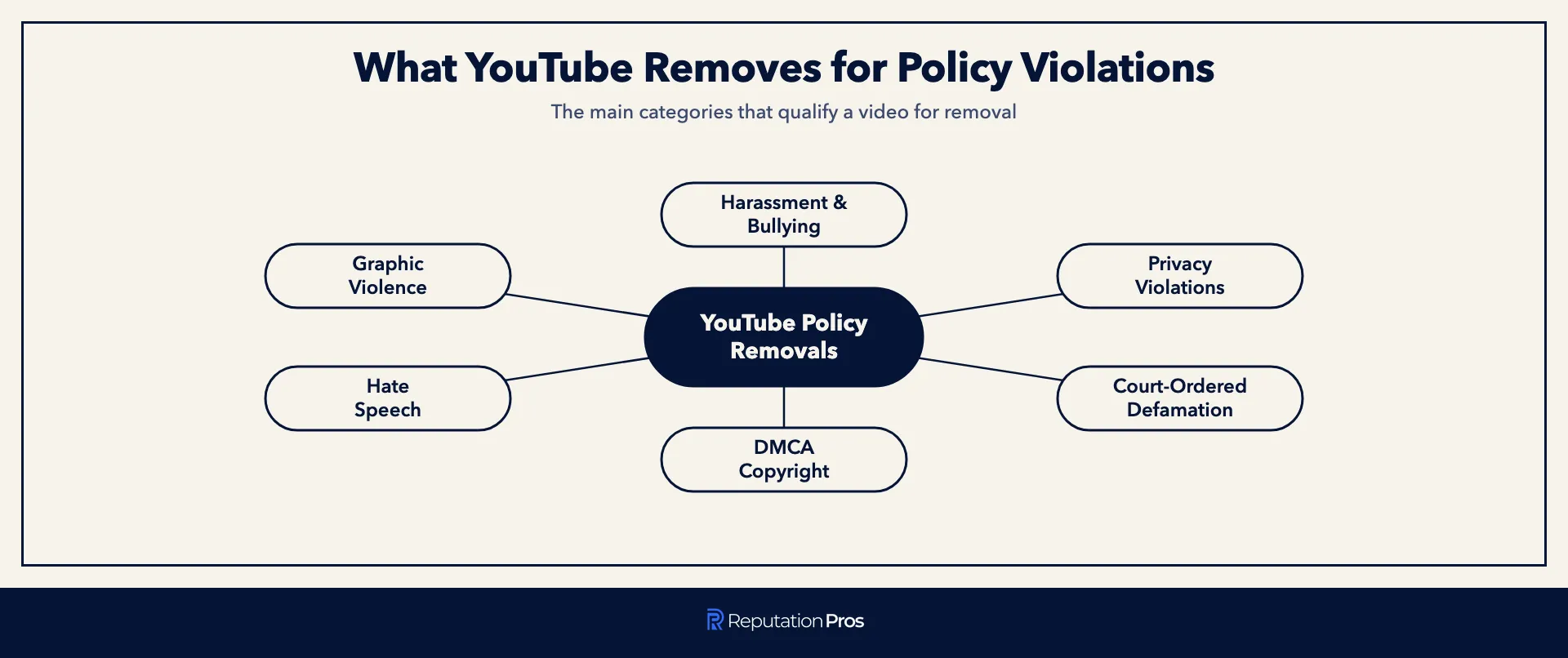
- Harassment and cyberbullying content: videos targeting individuals or groups with abuse, threats, or bullying.
- Privacy-violating videos: content revealing personal information without consent, such as addresses or phone numbers.
- Court-ordered defamatory videos: videos removed under a legal order finding the material defamatory or harmful.
- Copyrighted material under the DMCA: videos using protected content without permission, subject to takedown.
- Hate speech: content promoting violence or hatred against people based on protected characteristics.
- Graphic violence: excessively violent content without educational, documentary, scientific, or artistic context.
- Deceptive practices: videos involving fraud or misleading information that threaten community trust.
- Misinformation: content spreading false or misleading information on sensitive topics.
- Inappropriate content: videos with nudity, sexually explicit material, or content unsafe for general audiences.
Each category has specific guidelines in YouTube’s official Community Guidelines, which set the standards creators must meet.
Harassment and Cyberbullying Content
YouTube prohibits harassment and cyberbullying content, which targets individuals with abuse, threats, or intimidation. Harassment content centers on prolonged insults based on attributes such as group status or personal characteristics. Cyberbullying content degrades or humiliates individuals through abusive language or threats. YouTube’s guidelines note that content meant to humiliate or incite against a person is more likely to come down. Opinion and commentary, even when harsh, generally stay up unless they break the harassment rules.
Privacy-Violating Videos
Privacy-violating videos disclose an individual’s personal information without consent or invade a reasonable expectation of privacy. The videos often contain personally identifiable information such as full names, addresses, phone numbers, email addresses, or other sensitive data that could lead to identity theft or harassment. Non-consensual recordings in private settings, such as homes or medical facilities, also count as privacy violations. YouTube runs a dedicated process for privacy complaints: a person who believes their privacy was violated submits a complaint with the video URL and the specific timestamps. YouTube weighs each complaint case by case, considering whether the information is publicly available elsewhere or whether the content serves a public interest. A validated complaint can give the uploader a short window to edit or remove the content before YouTube acts further.
Court-Ordered Defamatory Videos
Court-ordered defamatory videos are videos YouTube removes after a legal directive confirms the content as defamatory. A court rules that the video contains false statements that damage an individual’s or organization’s reputation. Court-ordered removals require a formal legal process and a court decision, unlike standard Community Guidelines removals. Once YouTube verifies the court order, it removes the video, and creators generally cannot appeal the removal through YouTube’s standard procedures. The approach lets YouTube respect jurisdictional laws worldwide while balancing legal compliance against its free-expression policies.
Copyrighted Material Under the DMCA
YouTube removes copyrighted material under the Digital Millennium Copyright Act when copyright holders file valid takedown requests. The Digital Millennium Copyright Act, codified at 17 U.S.C. section 512, gives copyright owners a legal framework to request removal of videos that use their content without permission, such as music, video clips, or images uploaded without authorization. When YouTube receives a complete, valid DMCA takedown notice, the law requires it to remove the infringing content promptly. A copyright violation results in a copyright strike against the uploading channel, issued directly by the copyright holder rather than by YouTube. Copyright strikes can limit a creator’s ability to upload, and multiple strikes can lead to channel termination. A creator who believes the removal was an error or qualifies as fair use can submit a counter-notification, though the step carries legal implications and the risk that the copyright holder pursues further legal action.
What Content Will YouTube Not Remove?
YouTube will not remove content that falls within protected categories, even when some users find it controversial. Content with clear educational, documentary, scientific, or artistic context is generally exempt from removal, as are videos that serve the public interest, so a creator can share borderline material when it carries genuine educational value, documents important events, presents scientific information, or has legitimate artistic merit. YouTube also allows content that follows its Community Guidelines even when it sparks debate, because the platform supports diverse perspectives. Popular formats such as reaction videos, reviews, and commentary that add transformative input stay eligible. YouTube will not remove content just because it is unpopular, holds a disagreeable viewpoint, or draws complaints: the content must actually violate a specific policy. Content that complies with copyright law, respects privacy, and follows the Community Guidelines stays on the platform regardless of how some viewers feel about it.
How Do You Report Content for Removal on YouTube?
Reporting content for removal on YouTube starts with selecting the channel that fits the type of violation. The three main channels are flagging for Community Guidelines violations, filing a privacy complaint, or submitting a copyright or legal removal request. Each channel addresses specific violations, listed below:
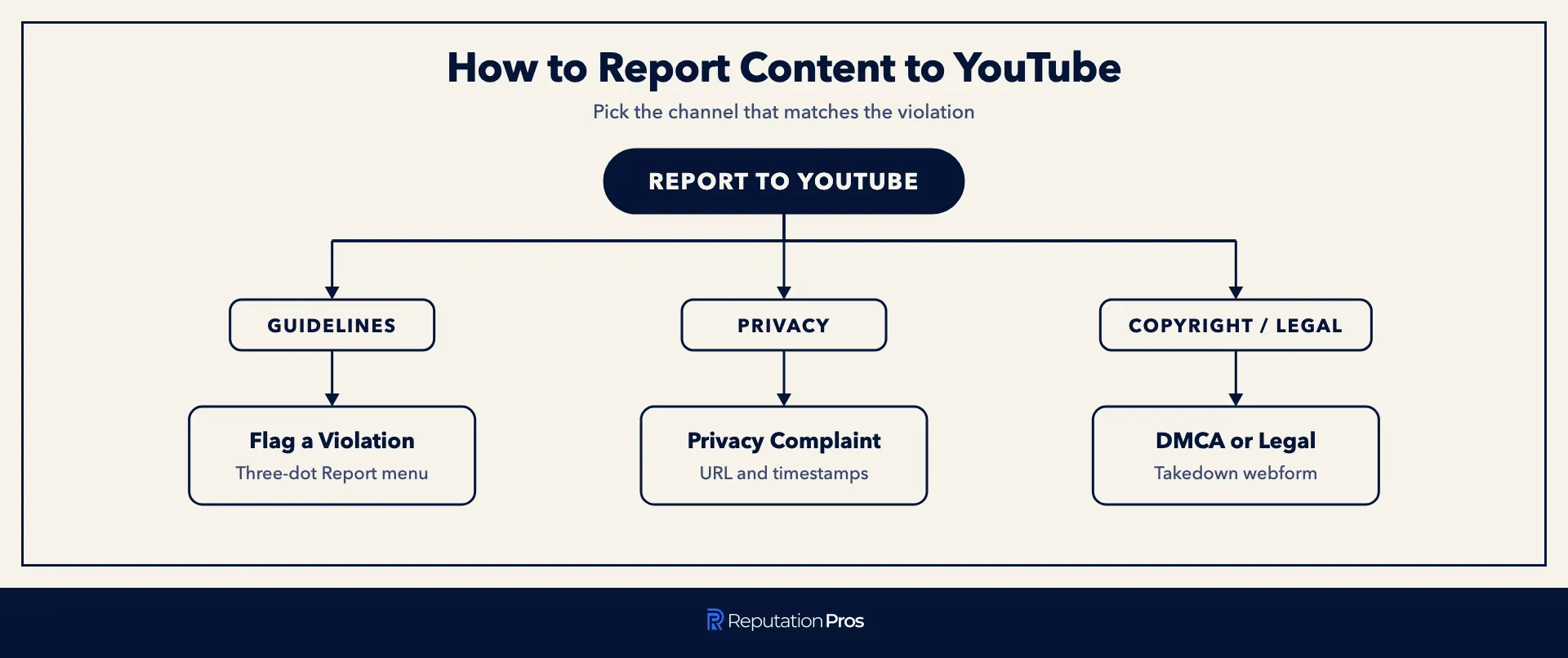
- Flagging Community Guidelines violations: for content that breaks YouTube’s rules, such as harassment or hate speech, flagged by clicking the three-dot menu and selecting Report.
- Filing a privacy complaint: for unauthorized sharing of personal information, filed as a formal privacy complaint with details of the violation.
- Submitting a copyright or legal removal request: for content that infringes copyright or raises legal issues, filed as a DMCA takedown or through YouTube’s legal forms.
Each route requires specific documentation, and each channel is detailed below.
Flagging Community Guidelines Violations
Flagging Community Guidelines violations is the primary method for reporting inappropriate content, using YouTube’s built-in flagging tool to alert moderators to videos that may break its policies. A user flags a video by clicking the three-dot menu next to it, selecting Report, and choosing the category that best fits the violation, such as harassment, hate speech, graphic violence, spam, or misinformation. Automated systems or human moderators then review the flagged content to decide whether it breaks the Community Guidelines, and the video may be removed, restricted, or left available when it is compliant. Flagging keeps the community involved in content moderation.
Filing a Privacy Complaint
Filing a privacy complaint is the method for videos that contain personal information without consent, separate from general Community Guidelines reporting. A person submits the video URL, the exact timestamps where the privacy issue occurs, and details that confirm the content identifies the individual without permission. YouTube weighs privacy against public interest, and not all requests end in removal. A valid complaint can lead YouTube to remove the video or require the uploader to edit out the private information.
Submitting a Copyright or Legal Removal Request
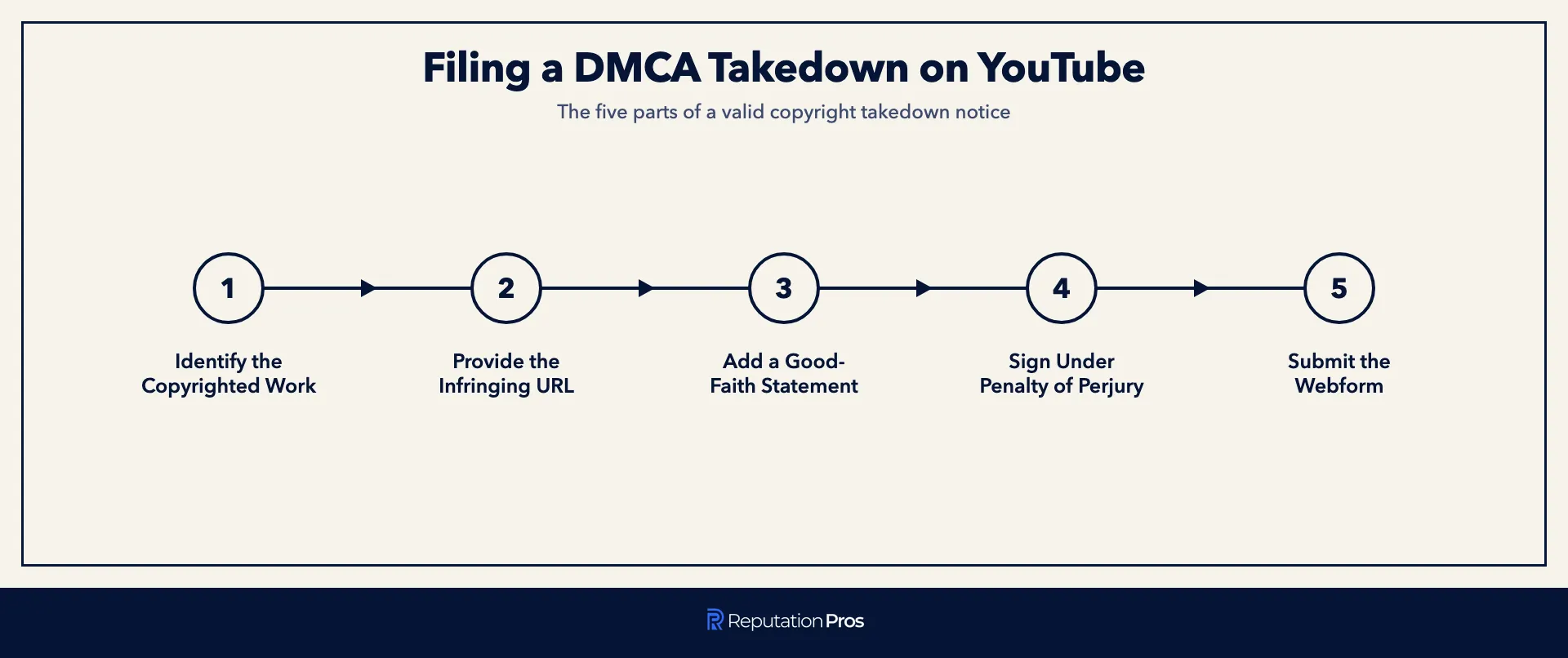
Submitting a copyright or legal removal request uses official channels to comply with the Digital Millennium Copyright Act or applicable legal standards. For a copyright claim, the copyright holder files a DMCA takedown notice through YouTube’s official webform, providing identification of the copyrighted work, the URL of the infringing content, a good-faith statement that the use is unauthorized, and a physical or electronic signature affirming accuracy under penalty of perjury.
 For legal removal beyond copyright, such as defamatory content, YouTube requires submission through separate legal complaint forms supported by relevant documentation, including court orders or official legal demands. YouTube reviews the request against applicable laws and its policies and often requires added verification before removal. A false or fraudulent request can carry legal consequences, including liability for damages under the DMCA.
What are the things to know about Content Removal Policies of YouTube?
YouTube’s content removal policies reward creators who stay compliant and avoid penalties. YouTube removes content that violates its Community Guidelines, including harassment, hate speech, and graphic violence, and content can also come down for copyright infringement under the DMCA, privacy violations, or court-ordered legal requests. YouTube uses both automated detection systems and human reports to find violations. Strikes can hit a channel hard by limiting uploads and monetization, and YouTube offers an appeals process and support resources, including Policy Training courses, to help creators understand the guidelines and contest removals they view as unfounded. Not all flagged content comes down, because YouTube makes exceptions for content with clear educational, documentary, scientific, or artistic context that serves the public interest. Reviewing and updating content to match YouTube’s evolving policies supports long-term channel success.
How Long Does YouTube Take to Remove Videos?
YouTube usually removes a video within a few days of confirming a policy violation. The timeframe varies with the complexity of the case and the type of content, and YouTube uses both automated systems and human reviewers to assess flagged content before removal. Straightforward violations tend to resolve faster than cases that involve legal review or a court order.
Is Video Content Removal Request from YouTube an Effective Solution?
A video content removal request to YouTube is effective when it matches YouTube’s policies and shows clear evidence of a violation. YouTube uses automated systems and human review to evaluate requests, which often removes content that breaks Community Guidelines, privacy rights, copyright law, or a court order. The effectiveness of a request depends on the quality of the complaint and the clarity of the violation, so a well-documented request that cites the specific policy works best.
Can removed videos reappear on YouTube?
Yes, removed videos can reappear on YouTube in specific circumstances. When a creator successfully appeals a removal, YouTube may restore the video after finding the initial removal was an error. When the underlying issue is not fully resolved, the same content may be re-uploaded by the creator or appear in a different form. Removal is often meant to be permanent, but it can be reversed or worked around depending on the situation.
What are the alternatives of Requesting removal content from YouTube?
When YouTube declines a content removal request, several alternatives reduce a video’s impact without direct removal. The alternatives are listed below:
- Content suppression: use search engine optimization to promote positive content and push the negative video lower in search results, reducing visibility rather than removing the content.
- Legal action: pursue remedies outside YouTube, such as a cease-and-desist letter to the creator or a lawsuit for defamation or privacy violations.
- Reputation management services: work with an online reputation management company to monitor and suppress negative content.
- Direct negotiation: contact the uploader to request voluntary removal, which helps when the content does not plainly violate YouTube’s policies but still causes harm.
The alternatives give different ways to manage and limit the impact of unwanted videos.
Why Choose Reputation Pros for YouTube Video Removal and Suppression?
At Reputation Pros, we are a strong choice for YouTube video removal and suppression because we understand YouTube’s content removal policies in depth. As an online reputation management company, we handle the removal pathways, including Community Guidelines violations, privacy complaints, copyright claims, and legal requests. When a standard removal request fails or YouTube declines it, we apply advanced suppression to lower the visibility of unwanted content in search results. The dual approach gives individuals and businesses a dependable partner for protecting their online presence.